

1xBet is an Online betting have become a familiar topic on the internet, particularly around major sporting events. Platforms such as 1xBet are often discussed in connection with sports wagering, casino-style games, promotions, and digital betting. However, behind the colorful interfaces and quick results is an important reality: betting involves financial risk, and winning is never guaranteed.
This article provides a neutral overview of 1xBet as an example of an online gambling service while focusing on the bigger picture—how online betting works, why people can lose money, what risks users should understand, and why gambling should never be viewed as a dependable way to make an income. For more apps, APKMint is the best platform.
Table of Contents
What Is 1xBet?
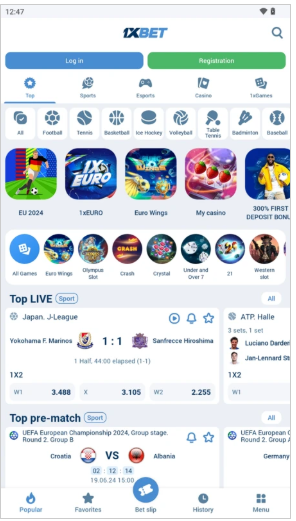
1xBet is a name associated with online gambling and sports betting. Like other betting services, its general concept revolves around users placing wagers on uncertain outcomes. Depending on the service and jurisdiction, online gambling platforms may offer sports markets and other gambling products.
It is important to distinguish between entertainment and income. A betting platform does not function like a normal job, savings account, or investment. A wager involves uncertainty, and the possibility of losing money is built into the activity.
The World Health Organization defines gambling as risking money or something else of value on an uncertain outcome with the possibility of receiving a larger return. It includes activities such as betting, casino games, lotteries, and similar forms of wagering.
How Online Betting Generally Works:
The basic concept behind online betting is relatively simple. A person selects an event or outcome, sees the available odds, and places a wager. If the selected outcome occurs, the wager may produce a return according to the applicable odds and rules. If it does not, the wager can be lost.
For example, in sports betting, odds represent the market’s pricing of possible outcomes. They are not promises about what will happen.
That distinction matters.
A team being given shorter odds does not mean it is guaranteed to win. A player being considered a favorite does not remove uncertainty. Sports contain countless variables, including injuries, tactics, form, weather, mistakes, and simple unpredictability.
In other words, odds describe probability and potential payout; they do not predict the future with certainty. For more real earning apps, you can visit referwin.com.pk
Why 1xBet Can Look Easier Than It Really Is:
Online betting is designed around quick decisions. A smartphone can put information, odds, results, and wagering interfaces in one place.
That convenience can make betting appear straightforward.
The difficult part is understanding that repeated wagers can produce cumulative losses. A person might win one bet and feel confident, then lose several later. Another common problem is attempting to recover previous losses by placing additional wagers.
This is sometimes called “chasing losses.”
It can turn a small loss into a much larger financial problem.
The WHO reports that gambling-related harm can include financial distress, relationship problems, mental-health difficulties, and problems meeting essential household expenses.
Is Online Betting a Reliable Way to Make Money?
No.
Betting should not be treated as a reliable income source. No betting strategy can guarantee consistent profits, and past results cannot guarantee future outcomes.
This is particularly important when advertisements or online discussions make gambling sound like an easy earning opportunity.
Real financial planning is different. Employment, education, saving, and regulated long-term financial products operate under very different principles from wagering on uncertain events.
Anyone presenting gambling as “easy money” is leaving out the most important part of the story: you can lose the money you wager.
Understanding Betting Odds:
Odds are one of the most important concepts to understand when discussing sports betting.
In simple terms, odds indicate the potential return associated with an outcome. They are influenced by the perceived likelihood of that outcome and other factors used by the betting market.
However, odds should never be interpreted as certainty.
Consider a hypothetical match where one team is strongly favored. Even if the market considers that team more likely to win, the underdog can still win. Probability is not the same thing as certainty.
This is why experienced analysis cannot eliminate gambling risk.
Common Risks Associated With Online Gambling:
Online gambling can create several types of risk.
Financial Risk:
The most obvious risk is losing money. Repeated small wagers can also become significant when added together over time.
A person may initially think, “It is only a small amount.” But frequent betting can gradually increase total spending.
Emotional Risk:
Winning can create excitement, while losing can create frustration. For some people, this emotional cycle can encourage repeated betting.
Loss-Chasing:
Trying to recover losses by betting more can become particularly dangerous. Instead of accepting a loss, someone may increase the amount wagered in an attempt to get back to where they started.
Unfortunately, another loss can make the situation worse.
Time and Attention:
Online gambling is available through digital devices, meaning it can compete with school, work, family responsibilities, sleep, and other activities.
WHO notes that easy access and the increasing commercialization and digitization of gambling can contribute to gambling-related harm.
Privacy and Security:
Any online service involving accounts and financial information requires users to think carefully about privacy and cybersecurity.
People should be cautious about suspicious websites, fake applications, unofficial downloads, phishing messages, and requests for sensitive information.
Gambling and Young People:
Age restrictions exist for an important reason.
Young people can be particularly vulnerable to online marketing and digital environments. WHO has highlighted concerns about the normalization of gambling among children and young people through online promotion and sports-related marketing.
For teenagers, gambling should not be treated as a source of entertainment, income, or a shortcut to financial success.
If betting-related content appears online, it is sensible to remember that advertisements generally highlight the exciting side of a product rather than the full range of potential consequences.
Warning Signs of Gambling Problems:
Problem gambling does not necessarily begin with an obvious crisis. It can develop gradually.
Some warning signs include:
- Thinking about gambling excessively
- Spending money that was intended for necessities
- Repeatedly trying to recover previous losses
- Finding it difficult to stop
- Hiding gambling-related spending
- Neglecting school, work, family, or other responsibilities
- Continuing despite financial or personal problems
- Feeling that another bet will solve previous losses
WHO describes gambling disorder using three central features: impaired control over gambling, increasing priority given to gambling over other activities, and continuing gambling despite negative consequences.
These signs are worth taking seriously rather than brushing them aside.
Why Promotions Can Be Misleading:
Promotional messages can make betting appear more attractive by emphasizing bonuses, rewards, exciting sporting events, or large potential returns.
The important question is not simply, “What can I win?”
A better question is:
“What could I lose, and what are the conditions attached to the offer?”
Bonuses and promotional offers can have detailed terms, restrictions, eligibility requirements, or wagering conditions. More importantly, no promotion changes the fundamental fact that gambling involves uncertainty.
Online Betting and Financial Planning Are Different:
It is easy to confuse gambling with investing because both involve money and uncertain outcomes. They are fundamentally different activities.
Investment decisions generally involve acquiring assets or financial instruments with the expectation that their value or income may change over time. Gambling involves staking money on uncertain outcomes where the wager itself is the central activity.
Therefore, someone looking for a way to build financial security should not substitute gambling for saving, education, employment, or appropriate regulated financial planning.
How to Think About Betting Claims Online:
The internet contains plenty of claims about betting systems and “sure wins.”
Such claims deserve skepticism.
Be particularly cautious about statements such as:
- “Guaranteed profit”
- “Risk-free income”
- “100% winning strategy”
- “Never lose again”
- “Secret prediction method”
- “Easy daily income”
No legitimate method can remove uncertainty from inherently uncertain events.
Screenshots of winning bets also prove very little. A person can display successful results without showing unsuccessful bets, total spending, or the complete history behind the screenshot.
Legal and Regulatory Considerations:
The legality of online gambling differs significantly between countries and jurisdictions. A platform being accessible through the internet does not automatically mean that its services are legal or authorized everywhere.
Before discussing any gambling service, readers should consult the relevant laws and regulatory authorities in their own jurisdiction.
This is especially important because online services can operate across borders, while local laws may impose separate restrictions.
A Safer Perspective on Online Betting:
The safest way to approach gambling-related information is to avoid treating it as a financial opportunity.
For adults in jurisdictions where particular forms of gambling are legal, public-health guidance emphasizes measures such as effective spending limits, breaks, self-exclusion tools, and stronger regulation. WHO also identifies prevention as an important way to reduce gambling-related harm.
But for young people, the clearest choice is not to participate in gambling.
There are plenty of ways to enjoy sports without putting money on the result. Watching matches, playing non-gambling games, following statistics, learning sports history, and discussing predictions without wagering can provide the excitement without financial risk.
Frequently Asked Questions:
Is 1xBet an online betting service?
Yes. The name 1xBet is associated with online betting and gambling services. Because gambling products and regulations can change, readers should not assume that a particular service or product is available or lawful in every country.
Can betting guarantee profit?
No. Betting involves uncertain outcomes, and there is no guaranteed-profit strategy.
Is online betting the same as investing?
No. Gambling and investing have different purposes, structures, risks, and regulatory frameworks.
Can people lose more than they expect?
Yes. Repeated wagers can compound, and attempting to recoup losses by betting more can increase financial harm.
Why are gambling advertisements so common around sports?
Sports sponsorship and advertising can normalize gambling and expose audiences to betting-related promotions. WHO identifies sports marketing as one factor that can contribute to the normalization of gambling.
What should someone do if gambling is interfering with daily life?
They should take the problem seriously and talk with a trusted adult or qualified professional. Gambling-related difficulties can be addressed, and asking for help is a practical step rather than something to be embarrassed about.
Conclusion:
1xBet is best understood in the wider context of online gambling rather than as an easy-money opportunity. Betting involves uncertain outcomes, financial risk, and the possibility of harmful patterns when gambling becomes difficult to control.
The biggest misconception is perhaps the simplest one: betting is not a dependable source of income.
A balanced approach means looking beyond advertisements, bonuses, winning screenshots, and exciting sports coverage. Understanding the risks, recognizing misleading claims, and protecting financial well-being are far more valuable than chasing the next uncertain result.
For young people especially, staying away from gambling is the safest choice. Sports can still be exciting without turning every match into a financial wager.